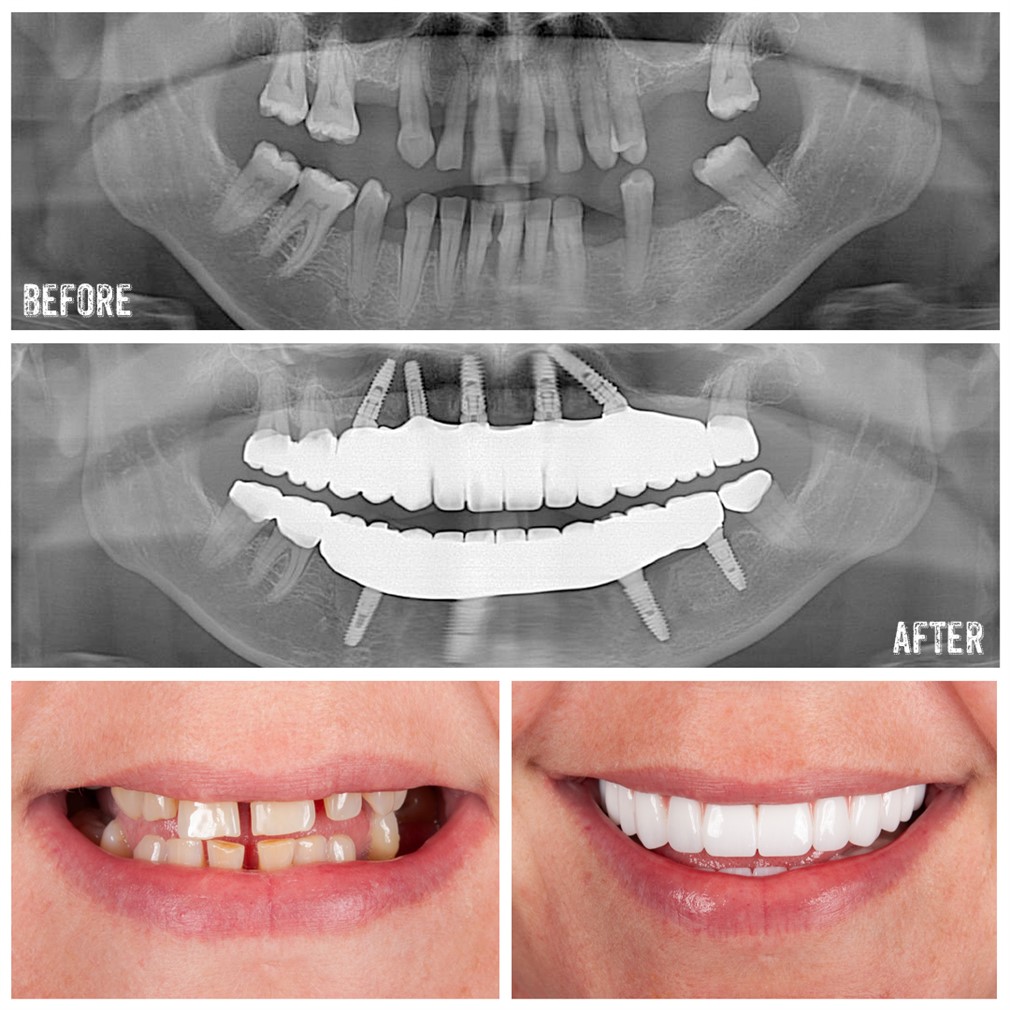

Why Foreigners Prefer Turkey for Smile Design Treatments
GET A FREE QUOTE


-
 Wayne KennedyI have just completed the 1st part of my treatment with Dentarma in Antalya. I can highly recommend this company. Their friendly service and proffesional conduct from my initial phone call with Gabriel to meeting Professor Emre and his whole team at the Dentarma clinic has been outstanding. They... +More
 -
Bethan WilliamsI can not speak highly enough about Dentarma. Both me and my partner had implants and zirconium crowns. From the very first conversation we had from Luiza to our initial meeting at the clinic, was so informative and professional and this remained throughout all our visits. The clinic is spotlessly... +More
-
Mrs Lynne Stephensonam a 60 year old lady I have just had 6 by 6 Dental Implants, done in May I was very nervous and anxious when I got to clinic Prof Dr Emre and his team greeted me on my arrival , Throughout my procedure Emre was very self explanatory, and very reassuring, I never felt any pain throughout my... +More
-
Patrick MatthewsAfter having my teeth done now over 2 weeks ago,i would like to say a massive thank you to everyone involved in my treatment from 1st consultation to last,the attention to detail and friendliness from the whole dentarma family is 5 star,and i was made to feel very at ease from first day to last,... +More
-
Dom CrawshawI have just had my first visit to Dentarma and i would like to say my experience with these guys was far beyond expectation, i was really worried about getting so much work done abroad however from the minute i met these guys i knew i had nothing to worry about, they are very professional from the... +More
-
Bogdan PetracheFrom the beginning to the end, here you will see a very experienced team. Nașide helped me and my girlfriend with everything, waiting for our flights, booking our car, booking our hotel, change of our hotel because of some problems. Very helpful andvery responsive even so we called here 11pm when... +More
-
Peter BrownWhen I first started looking at getting work done in Turkey I was very apprehensive not know what or who to take. As soon as you start looking you get inundated with offers. I really did not know how or why I chose Dentrma,I think they chose me. But I must admit they have been so professional... +More
-
Dariusz WnukI came to Dentarma Clinic for All on 6 as I had a lot treatments done on my teeths, now they were damaged and many of them was missing. I am so happy now, everything done in less than week. All staff really kind and helpful. Professors and Doctors are amazing in their job. My new smile - 12... +More
-
JagoDentArma Antalya I recently visited DentArma Antalya for dental treatment, and I couldn’t be more impressed with their exceptional service. From the moment I contacted them, the experience was seamless and professional. The patient coordinators are phenomenal—they ensured every aspect of my... +More
-
Gökhan AlicanVery proffesional people they do their job vey succesfully And very hospitality all stuff
Get a Free Doctor's Consultation
Why Foreigners Prefer Turkey for Smile Design Treatments
.
Why Foreigners Prefer Turkey for Smile Design Treatments: An Academic, Patient-Centred Guide
Executive summary (for UK readers)
Turkey has become a leading destination for smile design—often called a smile makeover or Hollywood Smile—owing to a combination of clinical capability, digital planDig)Antal. UK media reporting also reflects a marked rise in interest in dental tourism, with cost pressures and access constraints at home frequently cited as drivers. PMC Dental Tribune USA Reuters
1) What “smile design” means in modern dentistry
In contemporary practice, smile design is a structured, evidence-informed planning process that integrates facial analysis, occlusion, periodontal status, phonetics, and patient-reported outcome measures. Digital Smile Design (DSD) platforms allow clinicians to photograph/scan the face and teeth, simulate proposed outcomes, and communicate alternatives before any irreversible steps are taken (e.g., preparation for porcelain veneers). Studies describe DSD as enhancing diagnostic accuracy, case acceptance, and patient satisfaction by aligning aesthetics with function and biology. PMC+1MDPI
Key elements often included in a smile makeover in Turkey:
-
Porcelain or lithium-disilicate veneers (minimally invasive where indications allow)
-
Zirconia or ceramic crowns when additional strength or coverage is needed
-
Composite bonding for additive contouring or transitional aesthetics
-
Teeth whitening as an adjunctive measure
-
Gum contouring (periodontal plastic surgery) for symmetry and tooth display
-
Orthodontic alignment (where time permits), sometimes pre-prosthetic
2) Why Turkey? Core advantages for UK patients
a) Digitally driven workflows and outcome predictability
Many clinics in Turkey adopt full digital protocols—CBCT where indicated, intraoral scanning, facial scanners, and CAD/CAM fabrication—which shorten chair-time and help align “before and after” expectations with reality. Evidence from reviews and observational research supports DSD as a communication and planning tool that can improve satisfaction and interdisciplinary coordination. PMC+1 MDPI
b) Faster access and scheduling flexibility
Compared with UK waiting lists, international patients report rapid consultation-to-treatment timelines in Turkey, which is a frequent driver of dental tourism from the UK according to news and media analyses. PMC Dental Tribune USA Reuters
c) Total trip value (cost + logistics)
While exact prices vary by case complexity, materials, and number of units, media and market reports consistently note substantial cost differentials relative to typical UK private fees for veneers and smile makeovers. Lower operating costs and currency effects often underpin these savings; this, coupled with package options (airport transfers, accommodation, translators), creates a strong value proposition for UK visitors to Antalya and other hubs. Reuters
d) Tourism ecosystem: Antalya as a dental-holiday base
Antalya offers direct flight connectivity, a mature hospitality sector, and seasonal sunshine—allowing patients to combine “smile design Turkey” treatment plans with restorative leisure time, within safe postoperative windows (e.g., light activities between stages). Media coverage points to sustained growth in UK–Turkey dental travel. Reuters
3) “Hollywood Smile Turkey”: treatment options and indications
Veneers (porcelain / lithium-disilicate)
Best for: intrinsic discoloration, mild malalignment/shape issues, closing diastemas, and improving symmetry with minimal tooth reduction when feasible.
Longevity & maintenance: With appropriate occlusion, hygiene, and night-guard use (if indicated), modern ceramics can demonstrate long-term survival; chips can often be polished or repaired, but replacement may be needed over time. (General clinical consensus; see DSD literature for planning benefits.) PMC+1
Crowns (ceramic/zirconia)
Best for: heavily restored teeth, cracks, endodontically treated units requiring coverage, or when significant colour change and strength are required.
Composite bonding
Best for: additive reshaping with maximal preservation of enamel; useful as a trial smile or cost-conscious option. Maintenance intervals are shorter than ceramics.
Adjuncts
-
Whitening prior to colour-matching ceramics
-
Gum contouring to balance gingival zeniths and tooth display
-
Short-term alignment to reduce invasiveness of restorative work
4) Evidence, safety, and risk management
Informed consent and reversibility
A central academic consideration in smile design is biological cost. Additive approaches (no-/minimal-prep veneers, bonding, alignment-first) are prioritised where possible to preserve enamel and periodontal health. DSD tools help patients visualise outcomes before committing to irreversible steps, mitigating mismatch between expectations and reality. PMC+1
Complication awareness
UK media coverage highlights a spectrum of experiences with cosmetic dentistry—at home and abroad—underscoring the need to choose clinicians who adhere to sound indications, preparation philosophies, and follow-up protocols. The Guardian
Aftercare for UK patients
Plan for:
-
Written maintenance protocols (hygiene, diet, occlusal protection)
-
Remote review options and documented shade/match data for any local interventions
-
A clear pathway for managing post-operative sensitivity, provisional failures, or cementation issues after return to the UK (communication notes and records help local providers)
5) Cost and value: how UK patients typically compare options
UK private fee guides frequently list per-tooth veneer fees in the mid-hundreds to low-thousands of pounds, depending on material and clinician expertise. Reports on “Hollywood Smile Turkey cost” cite markedly lower totals for multi-unit plans due to lower operational costs, but exact figures vary widely by case. The academically sound approach is to compare like-for-like: unit counts, materials, add-on procedures (e.g., endodontics, periodontal surgery), temporisation quality, and included reviews.
6) The Antalya patient journey: step-by-step (what to expect)
-
Remote triage and records
Submit photos (rest, smile, retracted) and any recent radiographs. Discuss goals using DSD mock-ups or digital previews when available. PMC -
First visit
Comprehensive exam, periodontal charting, bite analysis, shade mapping, high-resolution scans, and photography. -
Smile simulation & case presentation
Multiple options with pros/cons: no-prep veneers, minimal-prep veneers, crowns, bonding, or aligner-first to reduce invasiveness. -
Provisional phase (“test-drive” aesthetics)
Trial smile to evaluate phonetics, lip dynamics, and hygiene access. -
Definitive restorations
CAD/CAM-milled or lab-pressed ceramics with adhesive protocols designed to maximise enamel bonding where possible. -
Quality assurance
Occlusal equilibration, photographic documentation (“before and after”), and issue of a night guard if indicated. -
Aftercare and UK coordination
Written maintenance plan, remote check-ins, and shared records to facilitate any future UK care.
7) Selecting a clinic in Turkey: due-diligence checklist for UK patients
-
Evidence-based planning: Does the team use DSD or equivalent digital protocols, and will you see a mock-up before irreversible work? PMC
-
Conservative philosophy: Do they prioritise additive approaches and enamel preservation?
-
Periodontal and occlusal focus: Are gums and bite stability addressed, not just colour and shape?
-
Transparent pricing & timelines: Itemised plans covering materials, unit counts, and reviews.
-
Documentation: High-quality photography, scans, and lab communication for predictable outcomes.
-
Aftercare pathway: Clear instructions and availability for remote follow-up once back in the UK.
8) FAQs UK patients search for
Is Turkey safe for a smile makeover?
Safety depends on clinician selection, case planning, and aftercare. Growth in dental tourism is well-documented in UK media; patients should still vet training, protocols, and evidence-based indications. PMC Dental Tribune USA
What is Digital Smile Design and why is it popular?
DSD is a digital planning system that links facial features to tooth form and occlusion, enabling previewable, measurable outcomes and clearer consent. PMC+1
How long do veneers last?
Survival depends on material, occlusion, hygiene, parafunction, and cementation protocols; ceramics can achieve long-term service with appropriate case selection and maintenance. PMC
Will I need to return to Turkey for problems?
Most clinics provide remote support and documentation to help UK providers manage minor issues. For complex problems, a scheduled review may be advised; clarify this before treatment.
9) Ethical and aesthetic priorities in smile design
A high-quality smile makeover is not merely whiter or more uniform; it respects:
-
Biology: periodontal health, enamel preservation
-
Function: occlusal harmony, phonetics
-
Psychology & identity: a design coherent with facial proportions and patient personality—evidence shows DSD can help align clinician and patient perceptions. MDPI
Conclusion
UK interest in smile design in Turkey continues to grow, driven by digital planning, access, value, and the appeal of treatment in destinations like Antalya. The academically sound path is conservative, digitally planned, function-first aesthetics with transparent case selection, meticulous provisionals, and structured aftercare. With that framework in place, a Hollywood Smile in Turkey can be both beautiful and biologically responsible—designed to last, not just to impress in photographs. PMC+2PMC+2MDPI Reuters